Scotland has a long history of Highland games where clans would compete against each other in sporting events. Tradition has it that early Celts viewed such events as war games where their strongest and bravest soldiers would win the games.
Some say that Highland games originated as a way for chieftains in clans to choose the best bodyguards and the fittest fighters. Culture and skills were also highly prized – musicians and dancers added to the prestige of the household. Choosing staff and supporters was done by holding competitions: good runners for taking messages across the hills, strong men for defence and a range of performers to entertain at celebrations and during the long winter evenings.
Many events at today’s Highland games still use items which would have been part of everyday life in the Highlands of old – for example rounded stones from river beds probably provided the original shot-putts while a Scots Pine trunk shorn of its branches is still the caber as tossed today.
Many of these traditions can still be seen in Highland games events, however they are now much more sociable and fun events celebrated worldwide. Images from Highland games are recognised worldwide as iconic of Scottish culture.
Highland Games Today
RSHGA is the governing body of Highland games in Scotland with over fifty members, plus a number of affiliated member events overseas. The Highland games season runs from the middle of May to mid September every year. If you are not familiar with the geography of Scotland refer to our interactive map which will show you where our member events are held in Scotland, help you see distances from where you will be staying and provide you with dates and links to their specific websites and contact details.
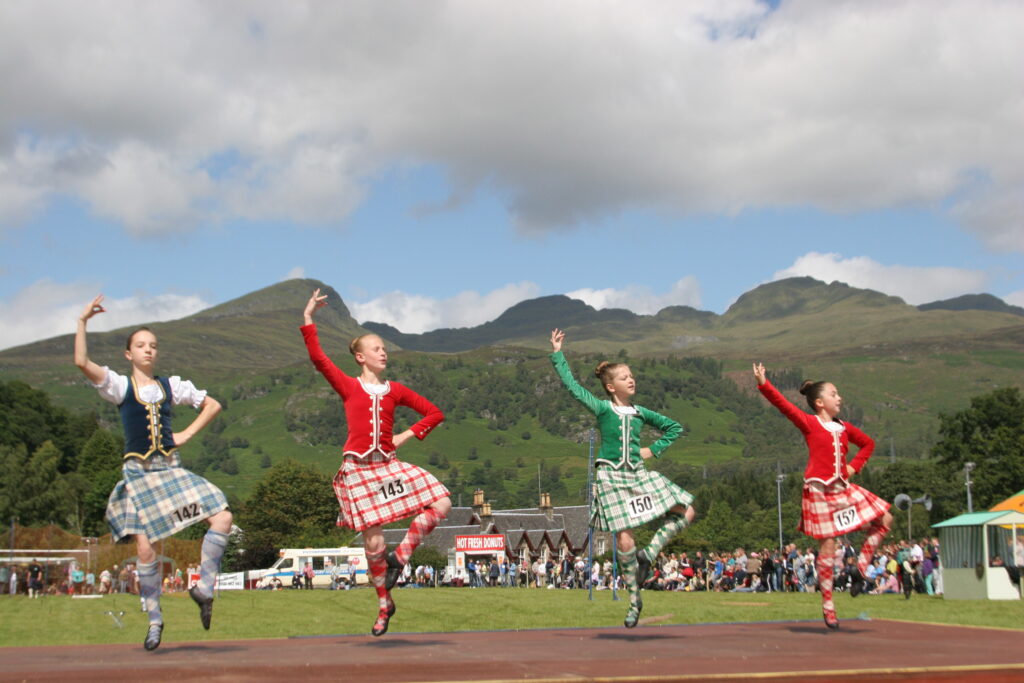
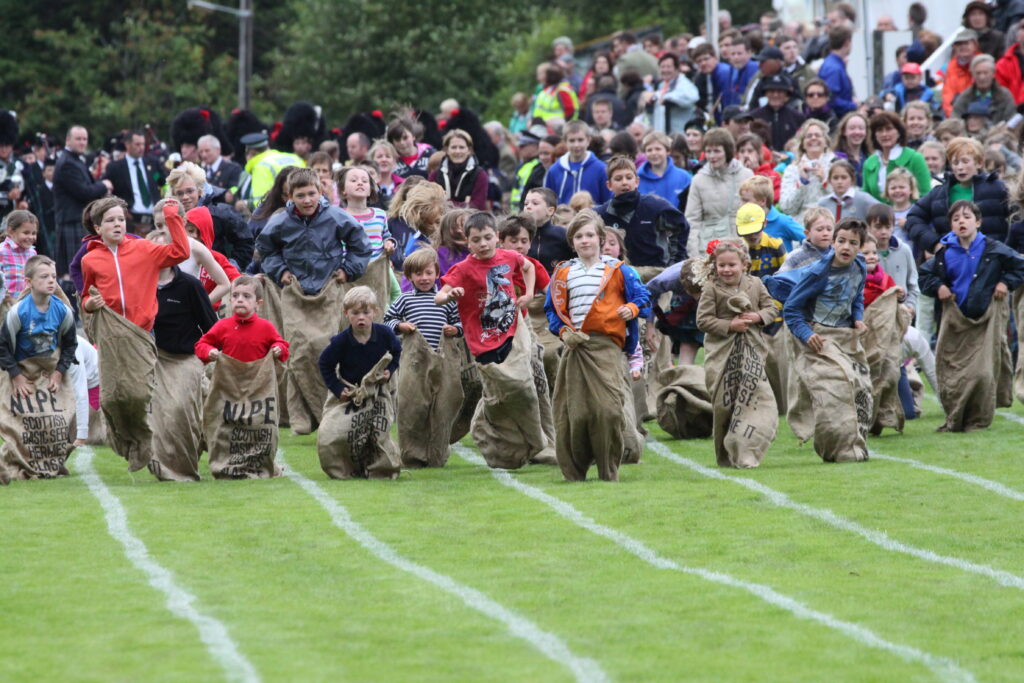
All our members host traditional elements of Highland games with a full range of activities in and around the arena. These cover a broad range, from the heavy throwing events (hammer; caber; weight for distance; weight for height, shot-putt) through to the light events (running; cycling; jumps) and other demonstrations of skill such as Highland dancing and solo piping – a number of events also have Tug o’ War competitions which crowds love to support. You can be assured of a great day out and authentic Highland games atmosphere at each RSHGA member event, while they all are unique and have their own character which is really special.
These events range from small community events to larger events, for example in Braemar, with over 10,000 spectators. Some events are relative newcomers while many of the events have traditionally been held continuously for well over 100 years, some claim a heritage that goes back hundreds of years. Many of the Games are held to a backdrop of marvellous scenery and the variety of activities going on in and around the arena, combined with attractive ticket prices, makes for a great family day out.
If you are interested in participating in any of the heavy or light field events you will need to register as an athlete with RSHGA in advance. Organisers are always looking for help so if you’d like to volunteer then get in touch with your local Highland games secretary.
If you haven’t already booked your travel or accommodation we’d suggest you go to www.visitscotland.com for further information.